
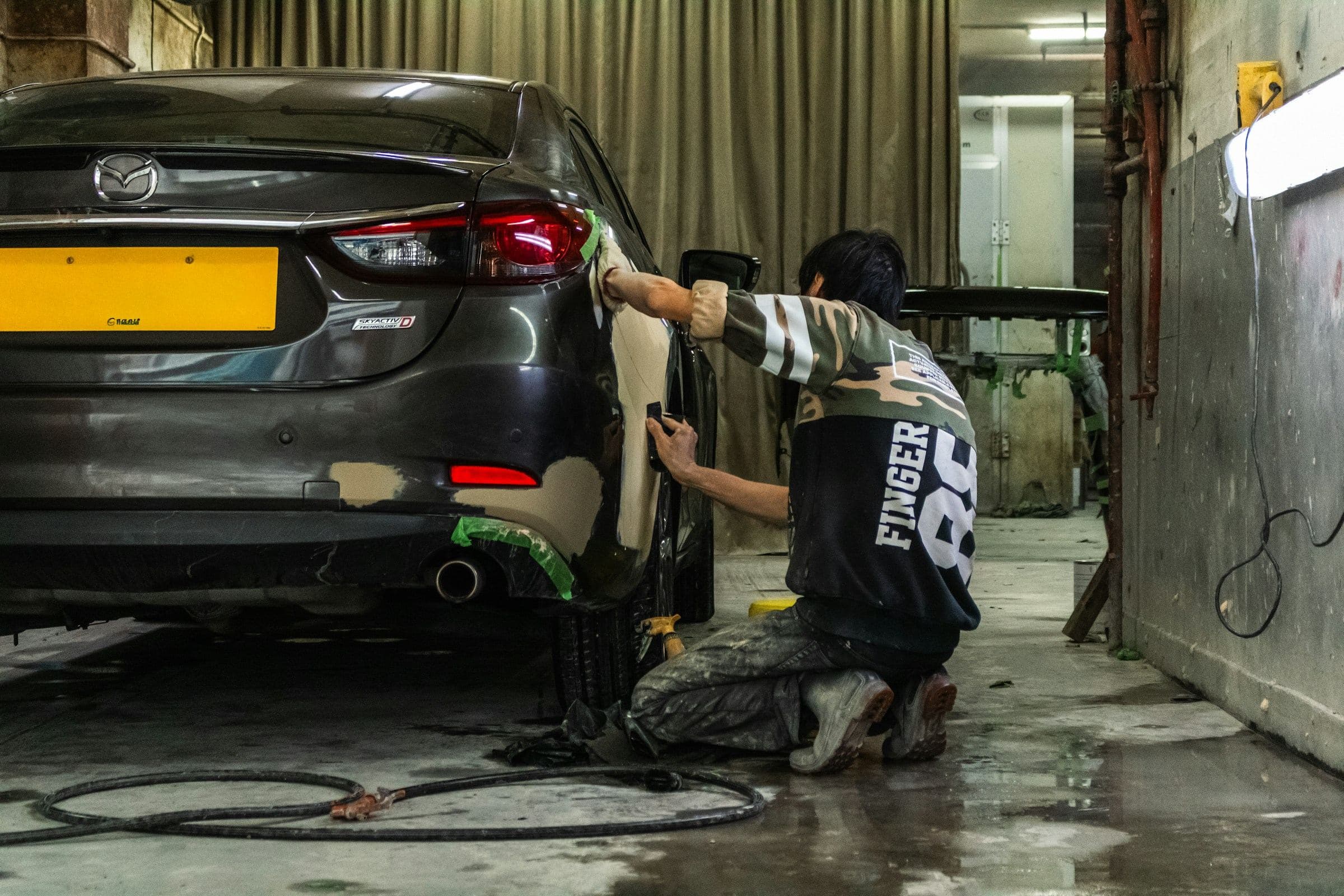
Damage type guide · Collision damage
Diminished value after side-impact damage
Side-impact damage weighs on value according to what sits behind the door skin. Doors and front fenders bolt on and can be replaced without cutting the body. Pillars, rocker panels and quarter panels are welded structure, and side airbags are part of the restraint system. An invoice that shows work on those parts supports a stronger claim.


By the Autoloss team · Reviewed by Monica Fisher · Published
Why the side is different
The front and rear of a vehicle have crush space ahead of and behind the cabin. The side has a door and the body opening around it. That opening is formed by the pillars, the rocker panel along the bottom and the roof rail along the top. A side hit that reaches those parts is a repair to the cabin structure itself, and that is how an informed buyer or dealer will read it.
Bolt-on parts and welded parts
| Part | How it is attached | What its repair tells a buyer |
| Door shell or door skin | Bolted to hinges | Outer panel damage; check the door opening behind it |
| Front fender, mirror, moldings | Bolted or clipped | Outer panel damage |
| Quarter panel | Welded to the body | Cutting, welding and a large refinished area |
| Rocker panel | Welded structure | Structural repair |
| Center or hinge pillar | Welded structure | Structural repair to the cabin |
Welded structural parts are often made from high-strength steel, and vehicle makers publish procedures for how they may be straightened, sectioned or replaced. Our page on frame-related diminished value covers structural repair and the photographs worth asking the shop for.
Side airbags and curtains
Many vehicles carry seat-mounted side airbags and curtain airbags in the roof rail. If either deployed, the invoice will list restraint parts, and in some designs a seat cover, seat frame or headliner as well. Deployment is a separate signal to buyers on top of the body repair. See airbag deployment and diminished value.
What to look for on the invoice
- Pillar, rocker or roof rail lines, whether marked repair, section or replace.
- Measuring and pulling labor, which shows the body opening was checked or corrected on a bench.
- Door replaced or reskinned. A replaced door shell is a different repair from a repaired skin.
- Glass, seals and wiring. These show how far into the door and the opening the damage went.
- Blend lines on the neighboring doors and panels, which show how much of the side was repainted.
- Part type. The invoice normally records whether parts were original equipment, aftermarket or recycled. Our body shop guide explains why to ask.
What buyers and dealers check
Side repairs are easy to inspect. A buyer can open the door and look at the pillar, the seams along the rocker and the gaps around the door, and listen for wind noise on a test drive. A repair that leaves no visible trace still leaves the record: a history entry and an invoice that say the side structure was repaired. That record is the source of inherent loss. Visible problems add repair-related loss on top; the difference is explained in the three types of diminished value.
Evidence and whether to pursue it
An appraisal needs the final invoice with supplements, photos of the damage with the door open if possible, photos after repair, and the claim details. Tell us if a side or curtain airbag deployed.
A side impact that involved a pillar, a rocker panel, a quarter panel or an airbag on a newer vehicle is the kind of loss an appraisal is designed to document. A single door skin on an older, high-mileage vehicle may not justify the fee. Recovery also depends on fault and on state law. Autoloss prepares the report from your repair order, photos and records; a typical diminished value appraisal is $250–$350, and it is evidence for your claim, not a promise of payment.
Common questions
Is a replaced door structural damage?
Not by itself. A door bolts to its hinges and can be replaced without cutting the body. It becomes a structural repair when the pillar, rocker panel or roof rail around the door opening was also repaired, sectioned or replaced.
Does a side airbag deployment show on the repair invoice?
It should. The invoice lists the restraint parts that were replaced, and sometimes seat or headliner parts. Keep that invoice, because it is the record of what was done.
My door closes properly and the paint matches. Is there still a loss?
There can be. A good repair removes repair-related loss, but the accident record remains, and buyers and dealers often pay less for a vehicle with a reported side impact than for one with a clean history.
Keep reading
More from the damage type guide
Collision damage
Diminished value after a rear-end collision
Bumper-only repairs against rear body panel, trunk floor and rail work.
Collision damage
Airbag deployment and diminished value
What deployment signals to buyers, and the paperwork that answers it.
Collision damage
Diminished value after a minor accident
Real but small losses, and when an appraisal fee is not justified.
Frame and structural damage
How bad is frame damage? What counts and how serious it is
Which parts are structural, a severity scale, and why buyers care.

Not sure whether an appraisal will help?
The claim review is free: we look at your situation and tell you whether an appraisal is likely to help. The appraisal itself is a paid report. We help from start to finish, including a custom demand letter, and our support staff is a phone call away throughout the process.