
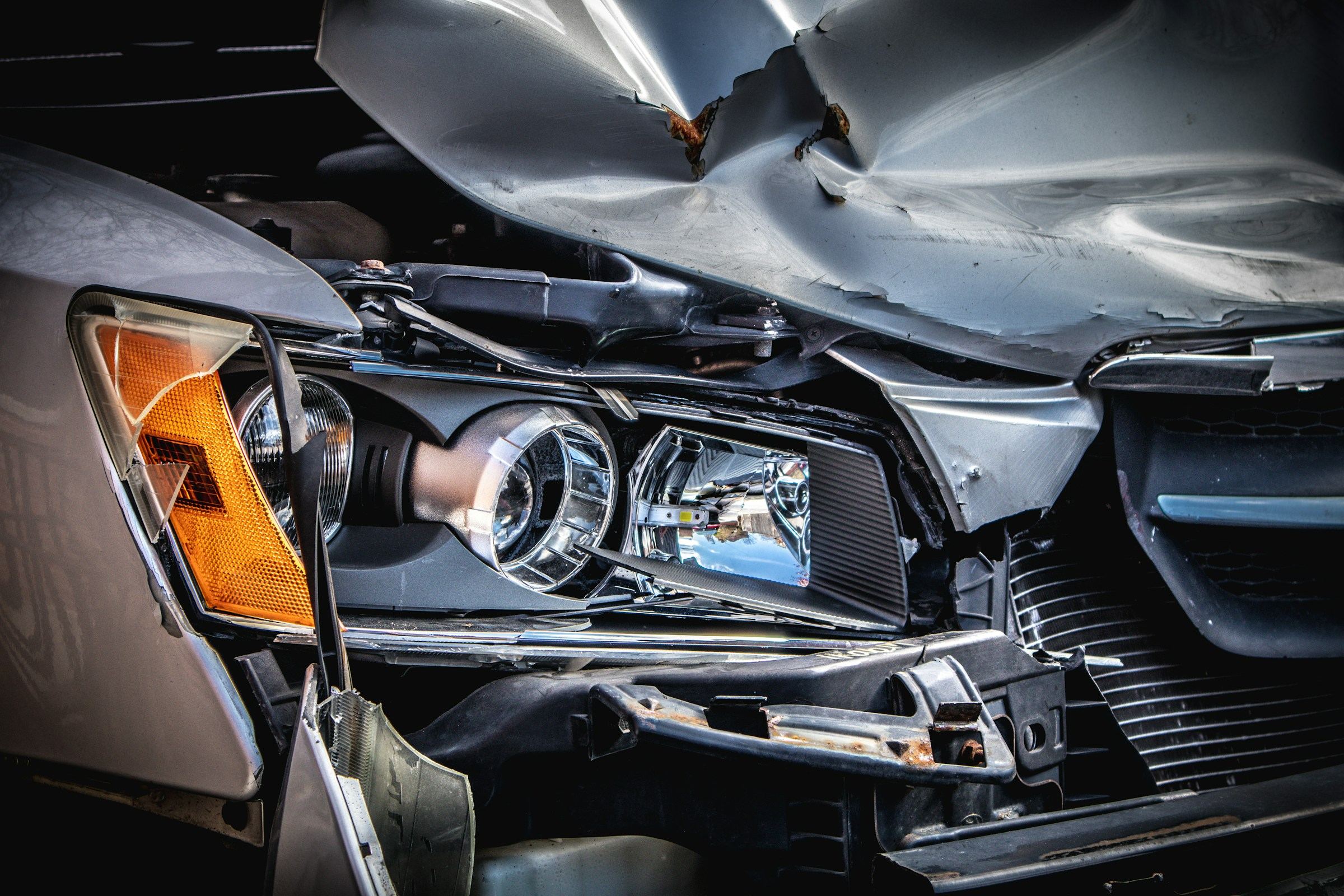
Repaired vehicles
Diminished value appraisal
Diminished value is the market value a vehicle loses because it now has an accident history, even after good repairs. An Autoloss appraisal measures that loss with comparable-vehicle evidence, so you can present it to the insurer. Prepared from your repair order, typically within 24–48 hours.


Turnaround
24–48 hours after we have your records
Typical fee
$250–$350; exotic vehicles may cost more
Inspection
Not normally required: photos and records
Review
Every report reviewed by Monica Fisher
The hidden loss
Why a repaired car is worth less
Buyers can see a vehicle’s accident history on reports such as CARFAX, and many dealers will pay less for, or refuse to certify, a vehicle with reported damage. Two otherwise identical vehicles can sell for noticeably different prices when one of them has been in a collision, even if the repairs were done well.
Your repair bill covers fixing the vehicle. It usually does not cover that lost resale value. A diminished-value claim asks the responsible party’s insurer to pay that difference as part of your property damage.
Who pays diminished value? Six common situations
Whether you have a diminished value claim, and against whom, depends mostly on who caused the accident. Eligibility also depends on state law, your coverage, the vehicle’s history and the facts of the claim, so treat this as the usual pattern, not a rule.
| Your situation | Who you claim against | Is diminished value usually payable? |
|---|---|---|
| Another driver caused the accident and was insured | That driver’s liability insurer | In most states, yes, if you prove the loss. Michigan is the main exception: its no-fault law limits the claim to a “mini-tort” of up to $3,000 for vehicle damage your insurance does not cover (MCL 500.3135(3)(e)). |
| You were partly at fault | The other driver’s liability insurer | Often, but reduced by your share of the fault, and some states bar recovery once your share reaches a set level. See your state’s rules. |
| Hit-and-run, or the at-fault driver had no insurance | Your own uninsured motorist property damage coverage, if you bought it | Depends on the state and the policy. The Insurance Information Institute says about half of the states allow it under this coverage. See hit-and-run and uninsured drivers. |
| You caused the accident | Your own collision coverage | Usually no. Standard collision wording pays for repairs and, except in a very few states, not for lost value. |
| The vehicle is leased | Usually the leasing company owns the claim | Check your lease first. See leased and financed vehicles. |
| The insurer totaled the vehicle | Not a diminished value claim | No. A totaled vehicle is paid at its pre-accident value; the question is whether that offer is right. See total loss appraisals. |
The first row is where most diminished value claims sit. The at-fault driver’s insurer pays for the harm its policyholder caused, and that includes the drop in market value when you can prove it. Your own policy is a contract, so what it pays depends on its wording, which is the next question.
Can you claim diminished value from your own insurer?
Usually not under a standard policy, but courts have split, and the answer turns on the exact policy wording. These are the leading decisions in seven states.
| State | Decision | What the court held |
|---|---|---|
| Georgia | State Farm v. Mabry (Ga. 2001) | The policies obligate the insurer to pay for loss of value even after repairs restore appearance and function, and to assess it whenever a policyholder makes a general physical-damage claim. |
| Washington | Moeller v. Farmers (Wash. 2011) | Under the terms of the Farmers policy at issue, the policy covers diminished value after a car is repaired. |
| Oregon | Gonzales v. Farmers (Or. 2008) | A promise to “repair” requires restoring the car to its pre-loss physical condition; if the insurer does not or cannot, it must pay the diminished value. |
| Florida | Siegle v. Progressive (Fla. 2002) | A repair-or-replace policy does not cover diminished value after an adequate repair. |
| Texas | American Manufacturers v. Schaefer (Tex. 2003) | The standard Texas personal auto policy does not pay diminished value when the car has been damaged but adequately repaired. |
| California | Baldwin v. AAA (Cal. Ct. App. 2016) | The insurer’s right to repair plus an express exclusion for diminution in value limited its obligation to the cost of repair. |
| Missouri | Lupo v. Shelter (Mo. Ct. App. 2002) | Once the car is fully and adequately repaired, lost market value is not part of the cost of repair or replacement. |
Even the decisions that favor owners turn on the wording of one policy, and insurers can and do write diminished value exclusions. Read your own policy’s physical damage section before you rely on any of them. Our guide to first-party vs third-party diminished value groups every state by where first-party claims stand.
Know the terms
Three types of diminished value
Inherent diminished value
The loss that remains after proper repairs, simply because the vehicle now has an accident history. This is the type most diminished-value claims are about.
Repair-related diminished value
Additional loss caused by incomplete or poor-quality repairs, such as mismatched paint, panel gaps or structural work that was not completed to standard.
Immediate diminished value
The difference in value right after the accident and before repairs. It is mostly relevant when a damaged vehicle is sold or traded in unrepaired.

What you receive
What a diminished value report includes
- Vehicle identification, mileage, trim and equipment
- Review of the repair estimate or final invoice and the damage areas
- Pre-loss market value, supported by comparable vehicles
- Post-repair market value, supported by comparable vehicles with accident history
- The diminished value figure and how it was reached
- A custom demand letter written for your claim, to send with the report
- Monica Fisher’s review before release
Process
How to get a diminished value appraisal
The appraisal is one part of the claim. Here is the usual sequence once repairs are complete, from the free claim review to sending the report to the insurer.
A typical report costs $250–$350, and you know whether it is likely to help before you pay. What the fee includes.
- 1
Confirm the claim is worth pursuing
Use the eligibility checklist or start a free claim review. - 2
Send your documents
Final repair invoice, photos of the damage and repairs, vehicle details, and the insurer’s claim number and contact. - 3
Receive your appraisal
Typically 24–48 hours after we have everything, reviewed by Monica Fisher. - 4
Submit it to the at-fault insurer
Send the report and your custom demand letter to the adjuster handling the property damage claim. - 5
Resolve the claim
The insurer responds with an offer. If you cannot agree, your options depend on your state and may include small claims court or an attorney.
Is there a diminished value claim form?
No state publishes a standard diminished value claim form. The claim is opened in writing: you send the adjuster the appraisal report with a demand letter that states the amount, the claim number and how the figure was reached. Our diminished value demand letter guide includes a template, and every Autoloss appraisal comes with a custom demand letter. If the insurer asks you to complete its own form as well, use the same figure as the report and attach both.
Diminished value is usually a separate request from the repair claim. Insurers do not normally add it to the repair payment on their own, so ask for it. Our guide to filing a diminished value claim with any insurer covers the steps from the claim number to the written demand.
What a diminished value report has to show
An insurer will look for three things in a diminished value report: that the vehicle and its repairs are described correctly, that the pre-accident value is supported, and that the post-repair value is supported by vehicles with a comparable accident history. A report that only applies a percentage, like a diminished value calculator, gives the adjuster nothing to check. Our appraisal methodology explains how comparables are chosen and adjusted, and Monica Fisher reviews every report before it goes out.
How long do you have to make a diminished value claim?
The hard deadline is your state’s time limit to sue for property damage, and it varies a lot: 2 years in Texas and Florida, 4 years in Georgia, 6 years in Oregon, for example. Negotiating with the insurer does not pause it. Check yours on our statute of limitations by state page, and order the appraisal after repairs are finished and well before that date. A claim against your own insurer may also have a shorter deadline in the policy itself.
Is a diminished value claim worth it?
It depends on how much value the vehicle is likely to have lost compared with the fee and the time involved. Newer, low-mileage and higher-value vehicles with structural repairs usually lose the most; older, high-mileage vehicles with cosmetic damage often lose too little to justify a report. Our guide to whether a diminished value appraisal is worth it works through the numbers, and the free claim review gives you a straight answer for your vehicle before you pay.
Sources
- MCL 500.3135 (Michigan no-fault: mini-tort, (3)(e))
- Insurance Information Institute, What is diminished value?
- State Farm Mut. Auto. Ins. Co. v. Mabry, 274 Ga. 498 (2001)
- Moeller v. Farmers Ins. Co. of Washington, 173 Wn.2d 264 (2011)
- Gonzales v. Farmers Ins. Co. of Oregon, 345 Or 382 (2008)
- Siegle v. Progressive Consumers Ins. Co., No. SC01-1219 (Fla. May 23, 2002)
- American Manufacturers Mut. Ins. Co. v. Schaefer, No. 02-0295 (Tex. 2003)
- Baldwin v. AAA Northern California, Nevada & Utah Ins. Exchange, 1 Cal. App. 5th 545 (2016)
- Lupo v. Shelter Mut. Ins. Co., 70 S.W.3d 16 (Mo. Ct. App. 2002)
Autoloss is an independent vehicle-appraisal company, not a law firm. We do not provide legal advice or legal representation. State law changes and depends on the facts of each claim. For legal advice about your situation, consult a licensed attorney in your state.
Start to finish
We help you from start to finish
Free claim review
We look at your claim and tell you whether an appraisal will help.
Appraisal + custom demand letter
A report built for your vehicle, with a demand letter written for your claim.
Help the whole way through
Questions while the insurer reviews it? Call our support staff at (877) 655-1661.

State law
Rules in your state
States differ on whether you can claim against your own insurer, which court decisions apply, and how long you have to act. Select your state.
State laws overviewKeep reading
Related guides
Guide hub
Diminished value appraisal guide
Thirteen guides: measuring the loss, comparing evidence, deciding whether to order.
Guide hub
Claims by insurance company
GEICO, State Farm, Progressive, USAA, Allstate and more: court decisions and where to send a claim.
Guide hub
Diminished value by vehicle type
New cars, trucks, EVs and Teslas, luxury, classic and commercial vehicles.
Guide hub
Diminished value by type of damage
Frame damage, airbags, side and rear impacts, hail, flood and prior accidents.
Guide hub
Unusual claim situations
Sold or traded cars, Carfax records, hit-and-run and uninsured drivers, loss of use.
By state
Small claims court by state
Claim limits, where to file, attorneys and appeals for a diminished value case in each state.
Cost
How much a diminished value appraisal costs
The flat fee, what it includes, when you pay and the cancellation terms.
Insurer
State Farm diminished value claims
Court decisions on State Farm policies and where to send the claim.
Eligibility
Do you have a diminished value claim?
The factors that decide whether an appraisal is worth ordering.
Tool
Diminished value calculator
A rough starting estimate. Not an appraisal.
Guide
First-party vs third-party claims
Claiming against the other driver’s insurer versus your own.
Methodology
How we appraise
Our sources, comparables and review process.
Guide
Diminished value vs repair cost
Two different losses, and how states measure them.
Guide
How accident history affects resale value
Why buyers and dealers pay less.
Guide
What happens after your appraisal
Sending it, insurer responses, next steps.
Article
Certified pre-owned rules and accident history
Why many certified programs exclude damaged vehicles.
Article
Frame-related diminished value
Why structural repairs weigh most on value.
Articles
All articles
Every guide on diminished value and total loss.
Clients who report their outcomes to Autoloss commonly recover approximately 80%–90% of the diminished value calculated in their reports, with reported recoveries often ranging from $5,000 to $10,000.
Individual results vary based on the vehicle, evidence, insurer, state, coverage, and circumstances of each claim. Past results do not guarantee a similar outcome.
Common questions
Who can make a diminished value claim?
Usually the owner of a repaired vehicle that was damaged by another driver can seek diminished value from that driver’s insurer. Claims against your own insurer are allowed only in some states and under some policies. Eligibility depends on state law, coverage, fault, vehicle history and the facts of the claim.
Do I have to sell the vehicle first?
Generally no. A diminished value claim is about the loss in market value caused by the accident, whether or not you sell the vehicle. Check your state’s rules and deadlines before relying on this.
What vehicles are good candidates?
Newer vehicles, low-mileage vehicles, higher-value and luxury vehicles, and vehicles with structural or frame repairs tend to lose the most value. Older, high-mileage vehicles or vehicles with prior damage usually lose less and may not justify an appraisal. The free claim review is where we tell you which applies to you.
How is diminished value calculated?
We compare the vehicle’s market value before the accident with its market value after repairs, using comparable vehicles for sale with and without accident history, and account for the damage, repair quality, mileage, equipment and local market. Our methodology page explains each step.
What does the report cost and how long does it take?
A typical diminished-value appraisal costs $250–$350; exotic vehicles may cost more. Reports are typically 24–48 hours after all required information is received.
Will the insurer pay the amount in the report?
Insurers, arbitrators and courts make their own decisions. An appraisal is evidence supporting your claim, not a promise of payment. Individual results vary based on the vehicle, evidence, insurer, state, coverage, and circumstances of each claim. Past results do not guarantee a similar outcome.
What is the average payout for a diminished value claim?
There is no reliable national average, and no government source publishes one. The amount depends on the vehicle, the damage, the market evidence and, on a claim against the other driver, the property damage limit on that driver’s policy. The free claim review gives you a realistic view for your vehicle.